
In Casa, children begin connecting their growing independence with more complex learning and greater responsibility. The Casa program at Lakeview Montessori School in Tecumseh welcomes children from 3 to 6 years into a multi-age classroom where hands-on materials, individualized lessons and meaningful work support their academic and personal development. As they progress through the Casa years, children build the skills and confidence to learn, collaborate and contribute to their classroom community.
Learning, Growing and Taking on New Responsibilities
The Casa years are about much more than preparing for Grade 1. In Lakeview’s multi-age classrooms, younger children become familiar with Montessori materials and daily routines, while older children build on those foundations through more complex work and greater classroom responsibilities. Children are able to progress according to their individual readiness rather than being limited to a single classroom-wide pace.
Over several years, children learn to make choices, approach challenges, contribute to their classroom community and take increasing responsibility for their learning. The goal is not simply to develop academic skills, but to help children learn how to learn as they begin discovering who they are as learners.
What Does a Day in the Casa Program Look Like?
A typical Casa day follows the natural rhythm of the Montessori classroom, with an extended work cycle at its centre. During this time, children choose purposeful activities, receive individual and small group lessons, practise skills and return to work that interests or challenges them.
A typical Casa day may include:
- An extended Montessori work cycle with individual and small group lessons
- Language, mathematics, Practical Life and Sensorial activities
- Science, geography and cultural studies
- Group gatherings and opportunities to work with classmates
- French, music, art and other enrichment experiences
- Outdoor time, movement and physical activity
- Meals and everyday classroom routines
Mealtimes offer opportunities for Casa children to practise independence, Grace and Courtesy, and responsibility through everyday routines. Along with enjoying fresh meals and snacks prepared in Lakeview Montessori School’s kitchen, children may help set the table, serve themselves and care for their eating space.
In the carefully prepared classroom, children can independently access appropriate materials, make choices, complete their work and return materials to their proper places. Educators observe children, present lessons and support their social development while helping each child progress toward their next challenge.
What Do Children Learn in the Casa Program?
Lakeview Montessori School’s Casa program offers a broad Montessori curriculum across several interconnected areas. Children begin with hands-on materials that help them explore and understand new concepts, then progress toward more complex work as their skills and understanding develop.
Language, Reading and Writing
The Casa language curriculum supports children as they develop vocabulary, recognize sounds, form letters and progress toward reading and writing.
Depending on their stage of development, children may experience:
- Phonemic awareness and sound games
- Sandpaper Letters
- The Moveable Alphabet
- Vocabulary development
- Letter formation and handwriting
- Reading development
- Word building
- Sentence construction
- Storytelling and creative expression
- Early grammar and parts of speech
For example, a younger child may be identifying letter sounds and building simple words with the Moveable Alphabet, while an older child is reading books independently and beginning to explore grammar.
Each child receives lessons suited to their demonstrated understanding, with opportunities to practise and build on what they have learned.
Mathematics and Mathematical Reasoning
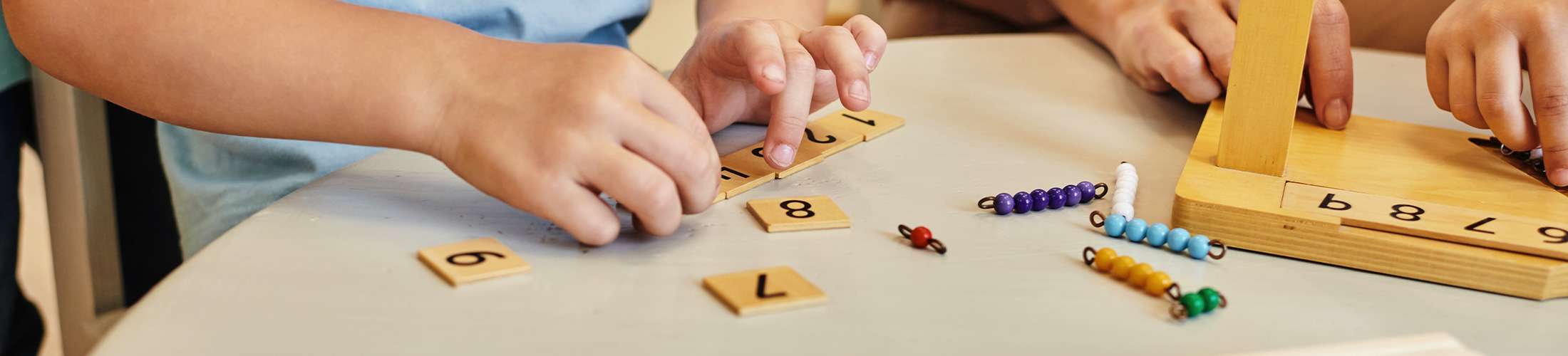
Casa mathematics begins with concrete materials that allow children to see and handle quantities before moving toward more abstract mathematical concepts.
Activities and lessons may include:
- Number recognition and quantity
- Counting and number sequencing
- Number Rods and spindle work
- The Decimal System and Golden Bead work
- Addition, subtraction, multiplication and division
- Place value
- Geometry and geometric relationships
- Patterning and classification
- Early problem-solving and mathematical reasoning
One child may be using Montessori materials to connect numbers with quantities, while another is working with addition, subtraction or more advanced mathematical concepts.
This progression helps children build an understanding of mathematics through direct experience, with each new lesson building on earlier learning.
Practical Life and Everyday Responsibility
Practical Life activities give children opportunities to develop coordination, concentration, independence and responsibility through meaningful everyday tasks.
Casa Practical Life activities may include:
- Pouring, transferring and sorting
- Food preparation
- Washing and cleaning
- Dressing and fastening
- Grace and Courtesy
- Caring for classroom materials
- Caring for plants and the environment
- Setting a table and participating in mealtime routines
- Developing concentration, coordination and responsibility
These activities help children learn how to care for themselves, their surroundings and others.
As they become more capable, children take greater responsibility for completing work, maintaining the classroom and contributing to their community.
Sensorial Learning
Sensorial activities help children refine their ability to observe, compare, classify and understand the qualities of objects and materials.
Children may work with:
- Pink Tower
- Brown Stair
- Red Rods
- Cylinder Blocks
- Colour, shape and texture exploration
- Sound discrimination
- Matching, grading and classification
- Geometry and spatial awareness
Through these materials, children explore differences in size, shape, colour, sound and other qualities while developing observation and reasoning skills that connect with later academic work.
Science and Cultural Studies
Casa children explore the natural world through observation, hands-on experiences and activities that encourage curiosity.
Their learning may include:
- Observation of the natural world
- Plants and animals
- Life cycles
- Human development
- Weather and seasons
- Land, water and environmental studies
- Simple experiments and scientific observation
- Classification and exploration
Children may also participate in seasonal activities, cultural celebrations and special classroom projects that connect their learning with everyday life and the wider school community.
Geography and Understanding the World
Geography introduces children to people, places and environments beyond their immediate surroundings.
Experiences may include:
- Globe and map work
- Continents and countries
- Land and water forms
- Flags and cultural studies
- Exploring communities, people and places around the world
These experiences help children develop an understanding of the world while making connections between geography, science, culture and their own observations.
The Montessori curriculum is intentionally interconnected. A child may begin with a hands-on material and eventually connect that experience to reading, mathematics, science, geography or a larger cultural concept.
French, Mandarin and Language Learning in Casa
Learning about additional languages and cultures is part of the Casa experience at Lakeview Montessori School. Language is introduced through age appropriate activities that encourage children to listen, communicate, build vocabulary and become familiar with new sounds and expressions.
French Language Learning
French is incorporated into Casa through dedicated instruction and everyday language experiences.
Children may encounter French through:
- Classroom conversations and interactions
- Vocabulary activities
- Songs, stories and games
- Familiar classroom routines
- Planned language experiences
- Dedicated French instruction
These activities help children develop listening comprehension, vocabulary, confidence and familiarity with French in ways that suit their stage of development.
English and Extended French Program Options
Lakeview Montessori School offers English and Extended French Casa program options. The amount of French used throughout the day depends on the program and classroom schedule.
Families interested in Extended French can speak with our Admissions team to learn more about the current language offerings and how French is incorporated into each option.
Mandarin Language and Cultural Experiences
Children are introduced to Mandarin through age-appropriate activities such as games, songs, sorting and crafts. These experiences help children become familiar with new sounds and vocabulary while exploring another language and culture.
How Does Individualized Learning Work in Casa?
In a Casa classroom, children do not all receive the same lesson at the same time.
Our educators carefully observe each child’s:
- Current skills and interests
- Concentration
- Coordination
- Confidence
- Independence
- Demonstrated understanding
Educators use these observations, along with their knowledge of Montessori’s developmental sequence, to determine when to introduce a new lesson, when a child needs more practice or when they are ready for a greater challenge. Children may be working on different skills within the same classroom and curriculum, with lessons matched to their individual readiness.
How Does Learning Progress Through the Casa Years?
Casa is designed as a multi-year Montessori experience. Rather than beginning a completely new program each year, children build on familiar materials, routines and relationships while progressing toward greater independence, concentration and more complex learning.
Developing Foundational Skills
Younger Casa children become familiar with the classroom environment, daily routines, Practical Life activities and foundational Montessori materials. Through repeated practice, they learn to choose appropriate work, use and care for materials, participate in classroom routines and develop concentration.
Building on Knowledge and Understanding
As children develop, educators introduce more complex language, mathematics, Sensorial and cultural materials.
Children begin making connections between earlier hands-on experiences and new concepts. They may spend longer periods concentrating, return to activities to refine their skills and take greater responsibility for completing their work.
Growing Into Classroom Leaders
In the later Casa years, children often become more confident with classroom routines, expectations and Montessori materials.
They have opportunities to model appropriate behaviour for younger classmates, take on additional responsibilities and contribute to the classroom community while continuing to advance academically.
This progression allows children to experience different roles within the same classroom as they grow.
What Skills Do Children Develop in the Casa Program?
Casa supports the development of the whole child. Alongside academic learning, children have opportunities to strengthen:
- Independence and self-care
- Concentration and sustained attention
- Fine and gross motor coordination
- Language and literacy
- Mathematical thinking
- Problem-solving
- Communication
- Social skills and collaboration
- Emotional regulation and self-awareness
- Organization
- Responsibility
- Confidence and self-advocacy
- Curiosity and love of learning
Through everyday classroom experiences, from choosing and completing work to caring for materials and working with classmates, children develop the confidence to approach new challenges and take responsibility for their actions. They begin to understand that they are capable of doing meaningful things for themselves and contributing to their community.
The Kindergarten Year at Lakeview Montessori School
The kindergarten year is an important stage of the multi-year Casa experience, rather than a separate program added onto it. Older Casa students continue building on the knowledge and skills they have developed in previous years, often working with more complex reading, writing, mathematics and cultural materials.
As their experience grows, children have opportunities to take on greater responsibility for their work and become role models for younger classmates. They may spend longer periods concentrating, organize and complete more complex activities, work collaboratively and contribute to their classroom community.
These experiences help children strengthen their academic foundations while developing the independence, confidence and learning habits they will carry into Junior Elementary.
Building Confidence, Social Skills and Independence
Academic learning is only one part of the Casa experience. Throughout the day, children practise making choices, organizing their work, communicating their needs and interacting respectfully with others.
Through grace and courtesy lessons and everyday classroom experiences, children learn to:
- Care for their personal belongings and classroom materials
- Complete activities and follow classroom routines
- Listen to others and communicate their ideas
- Work collaboratively
- Resolve simple conflicts
- Ask for help appropriately
- Respect the learning of others
- Take responsibility for their actions
Educators provide guidance and opportunities to practise these skills rather than expecting every child to manage everything independently. As children become more capable, they take greater responsibility for themselves, their work and their classroom community.
Outdoor Learning, Physical Activity and Enrichment
Outdoor time is an important part of the Casa experience. Children have opportunities for active outdoor play, exploration of nature and movement throughout the school day.
Outdoor experiences support more than physical development. Children observe seasonal changes, interact with the natural environment, develop gross motor skills, practise social skills and experience the world beyond the classroom.
Physical activity is also incorporated through age appropriate movement and physical education experiences that help children develop coordination and confidence.
Classroom and school community experiences may include:
- Practical food preparation
- Gardening and caring for the environment
- Seasonal activities
- Cultural celebrations
- Special classroom projects
- Music and art experiences
- Opportunities to share learning with the broader school community
These are not simply additional activities. They connect Montessori learning with everyday life and give children opportunities to participate in purposeful work, develop independence and contribute to their community.
How Do Educators Track My Child’s Progress?
Our educators continuously observe children and maintain records of:
- Lessons presented
- Skills demonstrated
- Work completed
- Areas that require further development
Progress is considered across each child’s academic, social, emotional and practical development rather than being based solely on traditional testing.
Families receive regular communication about their child’s development and have opportunities to discuss progress, strengths and areas for growth through formal reporting, parent-teacher meetings and ongoing communication throughout the year. These observations also help educators plan appropriate lessons and determine each child’s next steps.
Choosing Your Casa Program Options
Lakeview Montessori School offers full day and half day Casa options, as well as English and Extended French program choices. Our Admissions team can help families understand the current schedules and available options for their child.
Full Day and Half Day Casa
Both options provide a Montessori classroom experience. A full day gives children more time to settle into the classroom, engage in an uninterrupted work cycle and follow their interests without needing to stop shortly after beginning an activity.
The longer day also provides additional time for:
- Outdoor experiences
- Practical Life activities
- Social development
- Enrichment experiences
- Physical activity
- Meals
- Opportunities to revisit or extend Montessori work
For young children in particular, additional time for repetition can be valuable. A child may choose a material, receive a lesson, practise a skill, make connections and return to the activity independently.
Families considering full or half days can speak with Admissions about their child’s routines, developmental needs and the current program schedules.
Preparing for Junior Elementary
The transition from Casa to Junior Elementary is supported gradually rather than treated as a single event at the end of the program. Casa educators help children build familiarity with the independence, organization and classroom responsibilities they will encounter in Elementary.
As children prepare to move into the next classroom, educators share information about each child’s progress, strengths, interests and areas for continued development with the Junior Elementary team. When appropriate, children may also have opportunities to connect with the Elementary community before making the move.
Because both programs are part of Lakeview Montessori School, the transition builds on the learning, experiences and relationships children have already developed.
Continue Your Child’s Montessori Journey at Lakeview Montessori School
See how Lakeview’s Casa program can support your child’s growing independence, academic development and confidence as a learner. Connect with our Admissions team to explore program options and discover why families from Tecumseh, Windsor and across Essex County choose Lakeview Montessori School.
Frequently Asked Questions About the Casa Program
Casa includes a progressive language curriculum that begins with sound recognition, vocabulary and letter formation and develops toward word building, handwriting, reading and sentence construction. Educators introduce lessons according to each child’s readiness and demonstrated understanding.
Children begin with concrete materials that introduce counting, quantities and number relationships. As they progress, they may work with place value, geometry, mathematical operations and increasingly complex problem-solving.
Children choose appropriate work within a thoughtfully prepared classroom with clear routines and expectations. Educators introduce materials, guide children’s choices and help them learn to complete activities, care for their environment and respect others.
Educators observe each child’s progress and use their knowledge of the Montessori curriculum to determine when to introduce new lessons or provide additional practice. Children have opportunities to make choices, but educators continue guiding their development across the curriculum.
Lessons are matched to each child’s demonstrated understanding rather than a single classroom-wide pace. A child who is ready for more complex language or mathematics work can be introduced to an appropriate next lesson.
Casa is a multi-age Montessori environment for children from 3 to 6 years. Younger children have opportunities to learn from the classroom routines and examples around them, while older children can take on greater responsibility and become role models. Each child continues to receive lessons according to their individual readiness and development.
Casa is a multi-year Montessori experience where children learn through hands-on materials, an extended work cycle and individualized lessons rather than following the same lesson at the same time. The kindergarten year is a continuation of this experience, allowing children to build on the skills, materials and routines they have developed throughout their Casa years.
Casa supports literacy, mathematics and other academic foundations while helping children develop concentration, organization, independence, communication and problem-solving. Children also develop the learning habits and confidence to approach new challenges, while educators support a gradual transition into Junior Elementary.